Tuesday, 30 November 2010

SNEAK PEEK

My Dog Gave Me The Clap and Other Near Misses by muso Adam Morris is forthcoming in October 2011. Adam Morris plays in the Murder Mouse Blues Band.

From Chapter 2: Music

Saul had played many gigs like this one before. Three sets, forty-five minutes a set, ten to twelve songs a set depending. They were often strange and unusual experiences. Saul had played in clubs, bars and festival stages to big responsive audiences who appreciated his songs and his singing. But these gigs were different and came up more often. Saul was basically like a lot of musicians, a part-time musician. He couldn’t rely on playing full time as some weeks the gigs simply weren’t there. At times he’d go two months without work. That’s why he worked in the prison, that’s why he sometimes took relief work in schools, that’s why he was going a little off the rails. He had one leg in each camp and couldn’t get a secure footing in either. He had thought many times, if he fully dedicated himself to his music after ten or fifteen years he would be in a solid position. He also thought that if he stayed in the prison teaching or in a school or an office job or some sort of more stable and normal career, after ten or fifteen years he would be earning well, rising in his chosen field, progressing. But the way it was he had his flashes of success in both worlds and more pain and middling in both.

Saul would arrive at the venue like the one he had just played and set up while half the room was already full. No one had come to see him play. They had come to take their wife out for dinner, a casual dinner, they had brought the family and the kids out for an occasion, someone’s birthday, a visitor from overseas maybe. The fact there was a musician playing there was a bonus for everyone in the room. Saul always felt slightly uncomfortable setting up if the room was already in full swing. He felt like he was intruding. There would be some non-offensive light jazz background music over the house PA, the lights would be dimmed, the vibe was nice, you could smell the food, hear people talking, laughing, cutlery hitting plates, glasses clinking. Saul sometimes felt like a little brother at his big sister’s party. No one minded that he was there, but everyone could have a fine time without him.

They watched as Saul walked through the door carrying his PA. They watched as he returned to his car and came back with the leather bag of leads, microphone, mic stand and guitar stand under his arm. They watched as Saul disappeared again and reappeared carrying two guitar cases. As Saul would play these gigs alone, he had no one to talk to and so everything that was said in the room he could hear. ‘Ooh looks like we’ve got a guitar player,’ says a man in the far corner of the room to his wife whose company he’s not entirely enjoying. Saul noticed how usually the people who were having the most miserable evening would be the ones watching him the closest. ‘Two guitars hey, must be alright.’

Saul would try and make the set up as professional as possible. He didn’t want to do it too quickly because then he’d be sitting around waiting for the start time alone in a pub reading a paper he had no interest in. Finally he’d get a drink which was usually included in the pay, ask the bar staff to turn off the house music and wander back, hop on the high stool and create some atmosphere of his own, but not too much as to interfere with the football.

The pay for these gigs was pretty good, about the equivalent of a day’s pay in the prison or the schools. So although it wasn’t Madison Square Garden, one gig like this was a day less Saul had to spend at the prison or the school. He usually played something bluesy and mellow to start the set, trying to blend in with the atmosphere he was replacing, at least at first. As the set wore on Saul would loosen up bit by bit. More often than not the hardest part about these gigs was that hardly anybody ever clapped. If he got a small smattering of applause for each song he considered himself to be very lucky. It wasn’t that they didn’t enjoy it, most of the people who left at the end of the night would thank Saul for his music. They just didn’t clap for some reason while they were actually there for some profound reason. Saul had played many a gig where he sold six or seven CDs at the end but hardly anyone clapped while he was playing. Saul was used to this practice but it was still hard to get used to. In fact it was impossible to get used to, it was like having a conversation with someone who never answered, it felt bewildering. He remembered his first solo gig, when it first happened, he didn’t get a single clap, not one for the whole first set. He was playing in a beer garden in the middle of the day and forty-five minutes went by with nothing from the entire gathering.

Saul was at first mortified. Maybe I’ll just pack up and leave after this set he thought, that will look terrible. Maybe I’ll just take a long break, like a nine-hour break and pack up when everyone has gone home. Maybe I need to kill myself to apologise to these poor people. But the pub asked him back and each person who left the beer garden who passed Saul thanked him for a wonderful afternoon. These were things which baffled Saul, yet also these were things Saul was proud to have endured.

PHOTO GALLERY: Rock 'n Roll Reunion

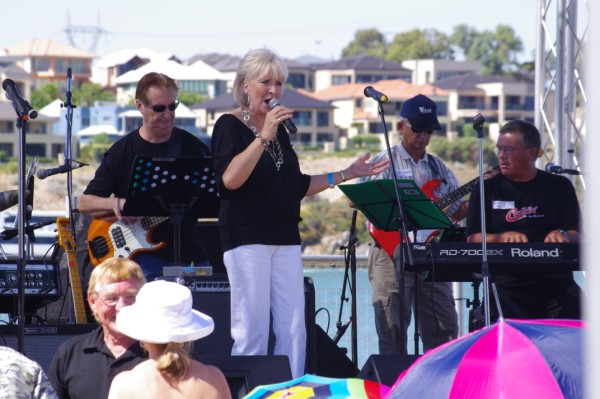
More photos from the reunion concert of rock 'n roll bands from the 50s and 60s, held to celebrate the launch of Jive, Twist and Stomp on Sunday 28 November at the Swan Yacht Club.


PHOTO GALLERY: Rock 'n Roll Reunion cont'd


PHOTO GALLERY: Rock 'n Roll Reunion cont'd ...


Monday, 29 November 2010

Twist and shout!

A line-up of WA rock 'n roll stars from the 50s and 60s helped launch Jive, Twist and Stomp at the Swan Yacht Club yesterday. A crowd of over 1000 turned out to jive to their favourite tunes and dance the night away.


Kelly Green


Clive Higgins


Pieter LaBrooy


Colin Nichol launches the book, joined by Murray Gracie (left) and Fremantle Press publisher and CEO Jane Fraser (right)


Johnny Young


Rod Christian

Jive, Twist and Stomp (December 2010) is available from Fremantle Press.

Saturday, 27 November 2010

60 seconds with ... Pieter LaBrooy


The Hi-Five, Pieter LaBrooy third from left.

My association with Perth bands was basically between postings in the RAAF! From 1964 I was in Phil Mason and the Mexmen (Herb Alpert Tribute), then Reg Carson and the Tollmen until 1965, then I played with Glen Ingram and the Hi-Five until the end of 1965. Unfortunately after that I was off on a posting to Butterworth, Malaysia, from which I had to go to Thailand during the Vietnam conflict. I was back in Perth in 1968, then played with the Top Brass, and later the J.A. Sound Syndicate doing ‘Chicago’ and semi big band stuff. That was it until 1972 when I was off again to Wagga Wagga, NSW as a RAAF instructor. I played some live music over there too, on guitar.

Our house was full of music when I was little so it was a natural progression that I would be involved in music. When I first heard Apache, that was it. Then Gene Vincent’s guitar playing finished me off – I was hooked and haven’t been the same since (my wife is still a widow!).

I think the Hi-Five was my best time, but I can say they all were great times. The jive songs really used to get the audiences going! Once that beat started that was it, especially if the song had a good feel. That was the essence of the whole deal. There was a song called ‘Tiddlywinks’ (an instrumental based on the Sailor’s Hornpipe) that we rocked up, and that got everybody going. We used to play that at the Bicton Hall Hop. People still tell me they used to go to the Bicton Hop and dance to it.

Jive, Twist and Stomp (December 2010) is available from Fremantle Press.

Thursday, 25 November 2010

Musos who rhyme: Ross Bolleter


Known for his compositions for and performances with ruined pianos, and once a member of The Black-Eyed Susans, musician and poet Ross Bolleter released his second collection of poetry, Piano Hill, in 2009.


Before the Deluge
Nelson, New Zealand, 1999

the white Mercedes
is under cover

the piano’s under
the dripping trees

a little girl comes out
of the white picket gate –
‘It’s ours, but it’s too big
to fit through the door.’

Would she play? she would –
‘Memories’ from Cats –
sweetly tentative in C

after she’s gone
I watch delicate rain
star the piano’s walnut
going black

Wednesday, 24 November 2010

EVENT REMINDER: Jive, Twist and Stomp concert


Celebrate the release of Jive, Twist and Stomp with a line-up of your favourite performers from the 50s and 60s!

28 November 2010, 2:00-6:00pm
Swan Yacht Club, Riverside Drive, East Fremantle

Get your ticket on the day at the Swan Yacht Club for $20.
This is a family friendly event.

Monday, 22 November 2010

EXTRACT: The Sixties

Eion Cameron recalls the 1960s with great wit, in gory detail and with no insight whatsoever, because he’d do it all again, in The Sixties. He plays out the soundtrack to the decade in chapters such as ‘Just Waving’:

1963 was the year the big waves washed over Australia. For the first time it was kids’ music which dominated the charts, and it didn’t come from the expected direction of rock and roll, it came from the beach or, more precisely the surf.

Number one hits included ‘Surfside’ by Digger Revell’s Denvermen, ‘Pipeline’ by the Chantays, ‘Surf City’ by Jan and Dean, ‘Wipeout’ by the Surfaris, and ‘Bombora’ by the Atlantics. Little Pattie almost made it to the top but stalled at number two with her double-sided hit ‘Stompin’ at the Maroubra’/’He’s My Blond Headed, Stompie Wompie, Real Gone Surfer Boy’.

Perhaps the most remarkable hit of ’63 was Kyu Sakamoto’s ‘Sukiyaki’, sung in Japanese. The song’s real title, ‘Ueo Muite Arukou’, would have ensured it never got airplay, but some smart cookie decided ‘Sukiyaki’ was one of the very few Japanese words that western DJs could handle.

The inexorable rock-and-roll march continued with big hits like ‘Tell Him’ by the Exciters, ‘Ruby Baby’ by Dion, ‘How Do You Do It?’ by Gerry and the Pacemakers and ‘And Then He Kissed Me’ by the Crystals.

None of this meant we’d lost our taste for novelty songs, because ’63 saw the release of Sheb Wooley’s ‘Hootenanny Hoot’, ‘Hello Mudduh, Hello Fadduh’ from Allan Sherman and ‘On Top of Spaghetti’ by Tom Glazer.

The real excitement on the music scene in 1963 was caused by the Fab Four, though at this stage they were not quite fab. In September they reached number three on the national charts with ‘She Loves You’, then just before Christmas the surf wave which had started the year turned into the Merseybeat tidal wave when ‘I Wanna Hold Your Hand’ swept all before it to top the charts.

Every Top 40 radio station in Australia jumped aboard the Beatle wave and rode it for all it was worth. In fact, because of the enormous excitement and publicity they’d created in Britain and Europe, the Beatles were famous in Australia before their music had even been heard here, thanks to the popularity of fan magazines or ‘fanzines’.

Any serious observer would no doubt agree that in Australia the music world changed over the summer of 1963-64. During the Christmas holidays, the Beatles were horrifying parents all over the country with their number one hit ‘I Want to Hold Your Hand’. The release of ‘I Want to Hold Your Hand’ was an event of national significance, at least for the younger portion of the population, and every self-respecting teenager in the country had a spotty ear glued to the tranny.

Parents pretty much wrote off the Fab Four as ‘those long-haired gits’, or with ‘they can’t sing, otherwise why would they go on with all that yeah, yeah, yeah nonsense?’

But we could hear what the Beatles were singing about, and we loved what we heard. And, at least in those early days, there was nothing remotely subversive or sinister about their songs, they were basically fairly straightforward and simple little love songs, delivered in a way that no one had before.

The pop ship entered somewhat murkier waters in the first week of 1964 when Roy Orbison’s Christmas hit ‘Pretty Paper’ displaced the Beatles, but the tide had at last turned, and what the Americans described as the British Invasion was about to sweep over Australia as well.

The Sixties is available from Fremantle Press.

Sunday, 21 November 2010

Dave Warner's rockin' the suburbs

Like all kids growing up in the 50s and 60s I loved pop music. It spoke to us like nothing else, and the remarkable thing is just how vibrant the WA music scene was – we even had our own live pop TV show, Club Seventeen hosted by Johnny Young. The highlight was always when Johnny and The Strangers played a song. Russ Kennedy was another regular; who can forget ‘Got My Eyes On You’?

The first band I ever saw live was The Valiants who played at my primary school fancy-dress party. They were mainly a guitar instrumental band and I recall them playing the theme song from the TV show Jamie McPheeters. Another memory is going to see relatives off at the airport when Billy Thorpe and the Aztecs were arriving. There was a huge crowd there, and one of the radio stations had actually set up a stage for bands to entertain the waiting audience – outside the buildings just off the tarmac! I was too small to see much but I caught glimpses of Ray Hoff and the Offbeats. Another close encounter with fame was when my sister and her ballet friends walked into The Rolling Stones taking a stroll through the city! My sister’s friends’ favourite local band was Love Needs Care.

Of course Perth was pretty provincial and I think The Easybeats were once banned from their hotel dining room for not wearing ties. How embarrassing! Hoadley’s Battle of the Bands was a highlight of the time and I made the trek to the Ambassador to see one of the finals. I can’t remember who won but I do remember being knocked out by Phil Manning’s guitar playing. Denis James was another great guitar player of that time.

Coming from Bicton I used to follow Johnny Johnstone and his mates through their various bands like Big Time Fred and the Chickens, Mud, and The Crabs. Other favourites were Pete Walker and Steve Tallis with The Jellyroll Bakers, Stafford D, The Bakery (of course), and Al Cash with The Great Pumpkin Mutiny and Dave Hole. I think I recall that Robbie Snowdon used to work at the barber at Melville and everybody wanted him to cut their hair.

My enthusiasm for music got me spoken to by the police for being at The Firecracker while underage. Perth had a great scene then and the bands and musicians inspired me to want to play music myself.

Dave Warner is a musician, author and screenwriter who originally hails from Perth. He played in punk and rock bands in the 1970s such as Dave Warners From the Suburbs and, later, The Suburbs. He is the author of City of Light and Footy's Hall of Shame and was the co-writer of feature film Garage Days. Dave also writes for television programs including the hit show Packed to the Rafters. He has recently been commissioned to write a series of children's novels.

Saturday, 20 November 2010

Musos who rhyme: David McComb

David McComb left behind an extraordinary body of work, notably the songs and albums he recorded with Australian post-punk group The Triffids. The fact that McComb also wrote poetry comes as no surprise to admirers of the songwriter’s powerfully evocative lyrics. Collected for the first time in Beautiful Waste: Poems by David McComb, this is an example:


The Township is Sleeping Now

The township is sleeping now.
As you, too, turn to bed,
Listen …
A distant roar in the night;
Traces, a scent,
of almost inaudible music.
The only light
of poems, damned and scoured and purged,
contained in the desperate letters
that lovers exchange.


Friday, 19 November 2010

60 seconds with ... Rod Christian

Which bands did you play in, and when?

I started drumming in a band called Four of a Kind while still at school in Year 11 at Trinity College in East Perth in 1965. We used to play a lot of dances and university functions in the old Barrack St Jetty Rowing Club and all of the school socials. It was that year I started to teach myself guitar and (on guitar) formed the Jeff Phillips Fan Club band with Jeff Phillips. We regularly played at his fan club dances in South Perth.

When I left school at the end of 1966, I formed a band called The In-Pulse with Peter Waterman, Bob Hawker, Ian Love (of Cocos fame) and Dave Sears. (See photo above, Rod Christian far left.) This was a great band with harmonies and lots of work around the Perth scene. A regular gig was St Pat’s dance every Sunday night in Fremantle, plus dances and cabarets around town including The Italian Club in North Perth.

We often did river cruises to Point Walter on a Saturday night and supported bands at nightclubs in Perth. I played lead guitar along with Nigel Ridgway, Jon Burns, Ron Burns and Brian Ward in The Blue Brass at the Nanking restaurant in Belmont from 1968. We backed many international artists including The Platters, The Sitopal Sisters, Four Kinsmen, and Martin St James etc. This is where I learned to read music (basically by ear) and also to play bass guitar, as we used to swap instruments to keep the music going. It was a lot of fun working with Peter Harries, Kelly Green, Ian de Souza (now a prominent Fremantle artist) and Elaine Mort, amongst other local musicians.

In 1969 I left The Blue Brass and formed The Motivation with Russ Kennedy, Nigel Ridgway (then Maurie Pearson), Peter Waterman and John Quilty. In this band I played lead guitar and keyboards. We played the Swan Hotel circuit in Perth and many nightclubs including Top Hat, Ricki Tik, Two Eyes, The Colosseum and more. In 1971 I joined Triax at the Morley Hotel as bass player. We played four nights a week and then we got the job as resident band at Contacio International in Scarborough. Here, Peter Harries and Kelly Green were the floor show artists and in 1973 Peter started his own nightclub, The Knight Klub in Como, where I joined him as musical director for the next nine years.

I still play in five different bands today including the original In-Pulse which works under the name Cruisin’ Rock ‘n Roll Showband with three of us original members still in the band!

What got you into rock and roll?

When I was seven years old, I lived in Claremont and the radio was always on. We listened to tunes like ‘Build Your Love on a Strong Foundation’, ‘The Battle of New Orleans’, ‘Tammy and Witch Doctor’. I absolutely LOVED these songs and could sing them back perfectly. The next-door neighbours were girls in their late teens and they were dating American sailors visiting Perth. The sailors brought 45 records over from the US and gave them to the girls who used to play them full bore on the stereo next door. My brother Bret and sisters Julie and Jan and I used to dance on the lawn. When I heard the sax solo in ‘Purple People Eater’ that was it! I had to play or be involved in music from that point on. We had an old piano and I could soon bang out the melodies of all these songs. From there I joined the junior choir at Trinity College and then the Senior Choir, then the ‘Four Of A Kind’ band and the rest is …

Is there a gig that really stands out in your memory?

There were many, particularly backing famous people. In the early days I was playing bass in the main backing band for Telethon with Ed Peters and Guy Bart and we used to back people like John Farnham, Cleo Lane, Johnny OKeefe and Little Patti. It was all live to air, so exhilarating and at the same time frightening.

I remember being support band to Gary Pucket and the Union Gap and to the Deltones. A memorable gig was backing Harry Secombe at Perth Concert Hall and Warren Williams, Johnny Young, and Ray Brown in subsequent gigs. I also went to many great gigs including Peter Frampton, Doctor Hook, Boz Scaggs, Paul McCartney, and, more recently conducted a season of my own musical Cruisin at the Regal Theatre in Perth as Musical Director, with Glenn Shorrock in the lead role. I also write heaps of choral music. A memorable occasion was back in 2002 when 9000 people heard a world premiere of a song I composed called ‘Anthem for Unity for Australia’ at the Perth Entertainment Centre.

What was guaranteed to get audiences off their seats and dancing?

Rock and roll of course! The simplicity, the harmonies, the great string arrangements, the backup vocals all combined to make this a unique genre. I have a very broad taste in music but you can’t beat good old rock and roll. I particularly like the backbeat and the tempo of jive music.

Jive, Twist and Stomp (December 2010) is available from Fremantle Press.

Wednesday, 17 November 2010

EXTRACT: Jive, Twist and Stomp

Johnny and the Strangers, 1963–65

Bill Elks vocals 1963; John Mills rhythm guitar; Graham Nicol lead guitar; John Hendrix bass 1963; Murray Thomas drums 1963; Johnny Young vocals; Maurie Pearson drums 1963–64; Warrick Findlay drums 1964–65; John (Scotty) Gray bass 1964; Don Prior bass 1964–65; John Eddy rhythm guitar 1965; Tony Summers lead guitar 1965

The first midnight stomp!

By Graham Nicol

Before Johnny Young there was Bill Elks on vocals. Bill lived down the road from me in Angelo Street, South Perth and became the first singer with the newly renamed Strangers, formed from the Valiants, aka Thin Men — John Mills, John Hendrix, Graham Nicol and Murray Thomas. Bill was probably an unlikely pop star, but had plenty of energy and a touch of theatricality; at an early Battle of the Bands (it really was a sort of sport back then) Bill brought an old violin that he’d picked up at a hock shop onto the stage, launched into a maudlin rendition of ‘Old Shep’ before smashing the thing on the front of the stage and powering into ‘Hound Dog’! Naturally we won first prize!

Bill had a Renault 750 in which he almost went places. One day we almost got as far as the Gaiety Theatre halfway down Angelo Street before it expired (again). His next car was an enormous pre-war Chev that could have carried the Renault in the boot! And it was in the Chev that we explored the possibility of performing at the Trocadero in Rockingham.

Rockingham was sleepy hollow back in the 60s, home to retirees, fisher folk and holiday shacks. Why Bill thought that Rockingham would welcome a rock & roll dance, at midnight no less, was a mystery then and now. But we went to it, printing posters and sticking them up all over Fremantle’s lamp posts and running an ad in the papers. Ross O’Reilly was to man the door, protected by a Dutchman of Bill’s acquaintance who had a black belt in Judo or something — macramé? We’d hired a caravan to kip in after the show, just down the road from the hall.

At ten o’clock that night we were standing outside the hall confronting disaster. There was no sign of patrons and the local chapter of the Royal Order of the Buffaloes was holding a meeting within the hall. When we politely enquired as to when they would vacate to allow us to set up our gear, we were told that it would be when they were good and ready. We could see their hats with the horns stuck on parading back and forth through the windows. At eleven thirty they were still parading, but by then there was a long stream of headlights back along the road to Fremantle, our audience! Soon there was a crowd of bodgies and widgies (real and wannabe) standing on the footpath. ‘When are you gonna start playin’?’ asked one sideboarded duffle jacket who obviously got his way often. We explained the situation re the apparent importance of the rituals being performed by the horned hats inside. Promptly, he and his mates burst into the hall and carried the entire local chapter out onto the pavement, hats, apparatus and all! We quickly set up and the joint was packed and rockin’. The more enterprising patrons were coming in through the windows, to be caught by the Dutchman and thrown back out again (some two or three times)! They were thick on the floor and perched on anything horizontal, including the hall piano which had seen better days and which was getting its remaining life kicked out of it in time to the music.

In the wee hours after the show, we sat in the caravan counting the pile of coins, we made over £17 each! We were on our way to stardom!


Jive, Twist and Stomp (December 2010) is available from Fremantle Press.

Tuesday, 16 November 2010

INTERVIEW: John Mills

(John Mills, far left, with Johnny Young and Graham Nicol in Johnny & the Strangers.)

Jive, Twist and Stomp is clearly a labour of love. How long has the idea been brewing?

Four years or so. I have a unique collection of seventy-four interesting black-and-white photos of the popular rock groups I was in in the 60s. Just the thought of the photos ending up in either one of my daughters’ cupboards gathering dust or even dumped in the Rubbish Bin Of No Interest was the beginning of this project. So with this in mind I decided with Murray and others to share them. Fortunately I know quite a number of musicians from that era and they too started to become interested in sharing their historical stories and photos before it becomes too late. Initially we had a slow response, but with time the interest mounted and so did the enthusiasm.

Was there a particular song or artist that grabbed your attention and got you involved in the rock and roll scene in the 50s?

Bill Haley and the Comets ‘Rock Around The Clock’ featured in the classic film Blackboard Jungle, followed by the musical films Rock Around The Clock and Don’t Knock The Rock with the best guitar solos from Fran Beecher. By the time the instrumental groups The Shadows and Ventures started to become famous, I was very determined to play electric guitar. I started late actually, in the early 1960s at twenty-one years of age.

The Perth music scene in the 50s and 60s was vibrant and growing – what were the factors supporting it?

It was the beginning of the ‘rock and roll’ era with this music being played on some radio stations. It was inspiring enough for teenagers to do their own thing (as they always do). It didn’t seem to be difficult to get them to come to dances in halls everywhere our ‘rock and roll’ music was pumping out and they could let their hair down and dance to the driving beat. Many mums and dads weren’t too happy. Tough! I also remember that some radio stations were still playing the Doris Day, Frank Sinatra type material which was so boring to most of the teenage set, the bodgies and widgies etc.

Tell us about a highlight of your early rock and roll days.

I was a muso in Johnny and the Strangers, and we won a Perth talent quest against over seventy other local groups. The prize was a guest spot on three shows as support act for the Johnny O’Keefe Show at the Capitol Theatre, Perth in mid-1964. We played to packed houses.

What also comes to mind is the speed by which Johnny and the Strangers became so popular. I was the rhythm guitarist and organised the gigs and we were all bowled over with the reception we got at many shows. Felt surreal.

Did you often get a chance to ‘jive, twist and stomp’ yourself, or were you too busy providing the tunes?

Interestingly I was a jive teacher (at eighteen years old) for a short time at the Wrightsons’ Dance Studio at the corner of Pier and Murray streets upstairs, three years before I took up guitar. Once I got confidence on the guitar I was kept pretty busy playing in various rock groups for the people who would jive, twist or stomp or whatever was in vogue at the time. I can only see it from a working musician’s point of view. Talking about views, some of them were very nice! Gets the heart goin’. This all happened in a variety of venues. Probably my two favourite venues were the hall on Broadway Nedlands at nighttime, followed by the Anzac Basement dance on St Georges Terrace, Perth on a Saturday afternoon with Johnny and the Strangers.

Western Australia still has a healthy music scene, with lots of local bands getting national (and international) attention. How would you describe the connection between Perth bands of the 50s and 60s and Perth bands now?

The modern musician has so much more available at their fingertips to learn from: high schools, all the musical instruments, the internet, hundreds of books, sheet music, music schools, DVDs with instructions on all instruments.

We had to learn from 45 records, mostly by ear, as there were no ‘rock & roll’ music teachers. In the 50s and 60s at high school level you could only be taught to read music, play violin or piano, all classical and that’s the way it was – boring.

What do you hope this book will achieve?

A historical and quite fascinating insight into the WA pioneers of rock and roll bands in the 50s and 60s and what they achieved and what they were thinking and the stories they can openly tell (not all stories can be printed!). Think of the enjoyment of the musos’ families scanning the hundreds of photos, seeing the fashions and what their dad or grandad and some ladies used to look like in various outfits as they performed. This fascinating, interesting quality book will be passed on to the next generation. Something to have forever.

Jive, Twist and Stomp (December 2010) is available from Fremantle Press.

Monday, 15 November 2010

60 seconds with ... Graham Nicol

A member of the organising committee for the upcoming Jive, Twist and Stomp concert on 28 November, Graham Nicol recalls his time in the spotlight.

The two significant bands that I played in were Johnny and the Strangers (see picture, Graham Nicol far left) and Ray Hoff and the Offbeats. My short exposure to fame was between 1962 and 1966, and I was one of many who were knocked over by the new rock and roll music which hit us in school in the late 50s. The music was exciting, and soon after reaching puberty we also noticed the attraction that the girls had towards the singers.

It wasn’t that hard to learn the rudiments of playing the hits, and the popularity of simple guitar instrumentals at that time meant that you didnt have to sing to have a chance at fame. Playing guitar seemed easier than being a good dancer and conversationalist, too.

Early artists such as Bill Haley, Elvis, Buddy Holly and Eddy Cochran soon vanished off the hit parade as they died, were jailed, enlisted in the army or lost the plot, and were replaced with slick songs by slick singers whose names often started with ‘Bobby’. Curiously, many bands around Perth were still belting out those early tunes to enthusiastic audiences. There was a disconnect between live performance and radio playlists which turned out to be the situation throughout Australia and the UK. The Beatles and the whole UK music invasion filled this vacuum, reinventing and reinterpreting those early exciting sounds – and in the process bringing the music back home to the USA. There was the twist, the stomp and a lot more dance crazes, but essentially it was the same music throughout the early 60s.

This era was pretty much pre-nightclub, although they were starting to appear. Generally though, the bands played in local halls – Swanbourne, the Cygnet in Crawley, the Fiesta in Scarborough, the Police Boys Club in Fremantle, the RSL basement and the Embassy in Perth. Many of the regular weekly dances were wholly paid for and organised by the groups themselves; The Strangers held the first midnight dance at the Trocadero in Rockingham – read the book, theres a story on that!

Jive, Twist and Stomp (December 2010) is available from Fremantle Press.